"4 Ways Doodling Enriches the Writing Process"

Great news! My article with tips for doodling and writing was published today at Women on Writing! Read on for some tips and info about my online drawing class that begins Monday, August 3rd.

“4 Ways Doodling Enriches the Writing Process”

By: Melanie Faith


Like most people, when I was in elementary school, I loved art class and drawing. I always went at whatever project our art teacher, Mrs. K, assigned with gusto, if not precision. By 7th grade, art became a club by invitation only (I didn’t get the invitation) and other activities like writing and surviving as a teenager took over.

Although I didn’t talk about it much, throughout the years I always liked filling margins with shapes and signing greeting cards to friends and family with a little mini-me sketch. In the past five years, especially, I’ve started to draw more frequently as its own activity and filled pages with new artistic adventures, from oil pastels and alcohol markers to enjoying fine-liner pens, gouache, and beautiful, gifted colored pencils.   

How does doodling enhance our experience as writers?


Showing up for Ourselves: There is something refreshing about a low-outcome or no-expectation activity. Like walking, running, hiking, cycling, gardening, and other physical activities where the point is most often showing up, putting in practice, and enjoying the time that is separate from the to-do list, drawing also encourages us to grab a time and show up for it—and for ourselves in a way that is often shoved aside in daily life’s deadlines and expectations. Both drawing and writing tap into a relaxed state we seldom feel in our rushed everyday lives where responsibilities and obligations stack up. Showing up for our art and seeing what comes of it can be the best gift we give ourselves.

Experiencing the Moment without Rush or Worry: When we grab a pen or pencil or brush and begin to noodle around, as I like to call it, just as when we sit before a notebook or a computer screen and begin to draft, we are opening ourselves up to a side of ourselves that responds to discovery. Whether or not the draft or sketch turns out as we like, we are practicing showing up and seeing what we can make. When we are drawing, we get to experience again what kids feel as they make things: kids don’t care yet what the end piece becomes; they just enjoy the physical and emotional experience of using the art supplies and covering the table with them and filling a page.

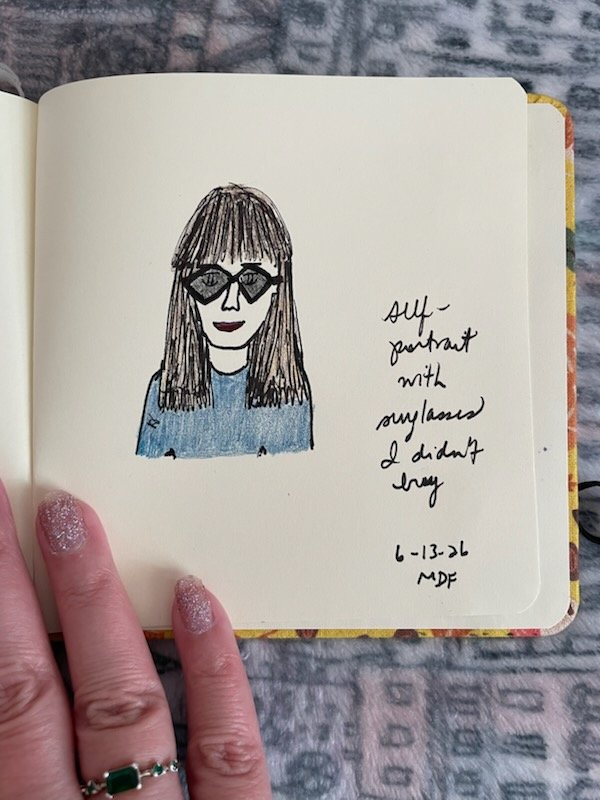
Perseverance or Freedom to Begin Again: I opened up my camera roll recently and chose some recent photos to doodle. I expected very little out of the sketches—mostly, it was for the joy and the practice, and to have a prompt that could help me to leap into making marks on paper quickly, without sitting to think about it for too long. Did the doodles match my photos precisely? Not at all, but precision is not my goal. In the drawing, some fingers were slightly bigger than the others in the peace sign my elder niece flashed to me in the yarn store and my younger niece’s arms under the pizza boxes were too short, and I didn’t quite pencil in the funky sunglass lenses completely on the self-portrait doodle. But does any of it matter? Nope. The hour and a half I sat outside with my little square sketchbook surrounded by art supplies, my hand and mind moving across the page, was the complete goal, and honestly, it was such fun that it felt like about ten minutes. I was surprised to look at my watch and discover it had been well over an hour.

We can put a lot of pressure on ourselves for the first sketches or the first drafts to be beautiful or remarkable, and yet, it’s a great reminder in both arts to invest without expectation of outcome. Also, we  learn when we’d like to continue and when starting over is best. Some drawings surprise me that even if they don’t look objectively great, if I keep finessing them, they can become something remarkable anyway. Or it’s just time to scrap and try again, no penalty. If what I draw starts off wonky and keeps going astray, I can just give a chuckle and turn to the next page. Either way, the experience in knowing when and how to continue or to laugh it off and begin afresh serves well in both drawing and writing (and dare I say? Also in life).

Fulfillment. This one needs little explanation. When I’ve been meaning to write or to draw or photograph for a while but haven’t gotten around to it, I start to feel…deflated, agitated, and distracted.  Once I’ve given myself the gift of a few minutes or an hour making something, I feel more content. I’m just happier when making new things; maybe you are, too.
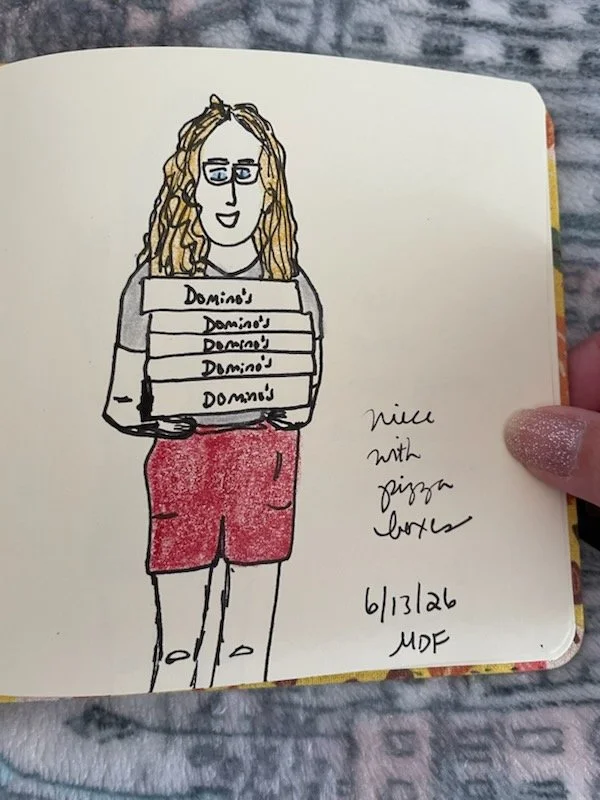
 

Try this exercise:  Give yourself 20 minutes today that you hadn’t expected and shower yourself with attention, by which I mean: grab a piece of blank paper or a notebook and make some marks, weather that’s a squiggly doodle you shade in, a few sentences about your day so far or your day yesterday, a stanza of a poem, or something else. Need inspo? Give your camera roll a spin and stop on an image that speaks to you. After your 20 minutes do a self-inventory: How do you feel? Are your shoulders more relaxed and less tight? How does your spine feel, and your breathing? Do you feel as if it’s been 20 minutes or a lot less? Repeat this exercise again later in the week and as often as you’d like. 😊


Care to learn more? I’ve got a class for you: Doodling Class clickety-click.
Exciting News! Cover Reveal and Pre-Order Link! 💃

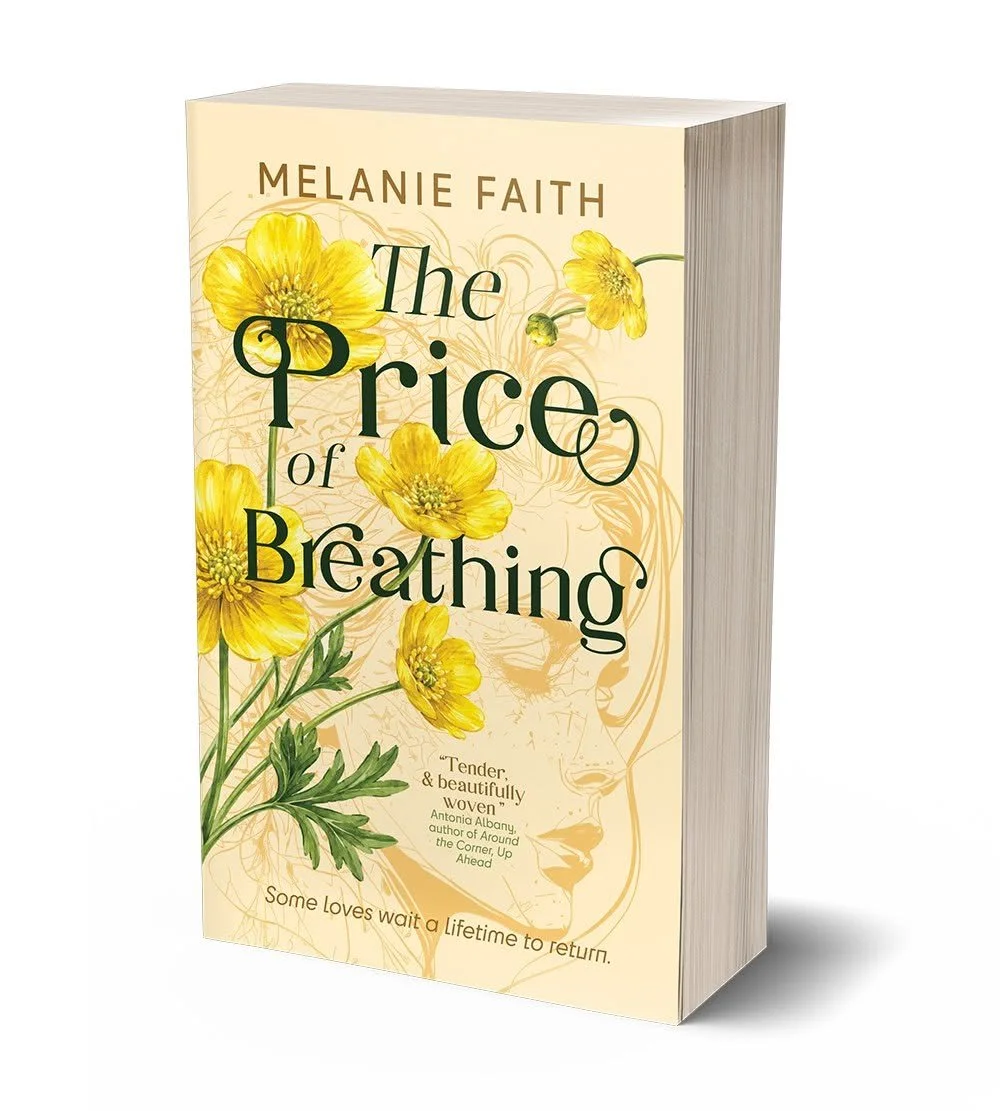
Super delighted to get to share the gorgeous cover for my latest poetry collection, The Price of Breathing.

Read more about the book’s plot and pre-order today at this link: Clickety-click to Vine Leaves Press!

Can’t wait to share this book for its book birthday in September, and many thanks to Vine Leaves Press and multitalented publisher Jessica Bell for this amazing cover design. I couldn’t be happier! Catch more of Jessica’s fabulous designs—I heartily recommend her work if you’re looking for a book designer or have a friend who is.

My Short Story Published at Grande Dame Literary & Art Journal 🥳

Thrilled to announce that my short story, “Mama’s Favorite,” was published at Grande Dame Literary & Art Journal. ✍️

Here’s an opening excerpt:

"She wanted you to have it,” Randall says. He holds it out, between us.

What can you say to that?

I move my hip from blocking the doorway. “Come in,” I say.

I let him scooch around me. He looks really good—he’s lost a few pounds and just had a haircut. And he smells even better: woodsy, warm, and clean. I can’t take a chance he’ll “accidentally” touch his hand against mine in the hand-over.

The cutting board is made of walnut. I already have two: one I got for my first apartment before we met, one I got when I cleaned out Nan’s house, but I don’t tell Randall that. I flash back to the first Thanksgiving we went over to Mama Lainie’s. She put me to work paring and dicing the celery, which was a relief because that’s about all I knew how to do. Mama Lainie was always great that way—she could size you up without making you feel weird about it and place you exactly where you’d do your best work.

Randall sits it on the counter next to the juicer.

“You got new Formica,” he says. Never content to just let it be. “When’d you get that?”

Clickety-click to read it all (and check out the other amazing stories they publish): here

Photo courtesy of Debbie Widjaja on Unsplash free-stock

My Poem Featured 😊👍

Such a joy to be part of my friend Lee Ann Berardi Smith’s wonderful videos that celebrate National Poetry Month! Lee Ann has shared other poems of mine going back to the early days of the pandemic, and it’s such a pleasure to hear her read from my work.

Check out this video, where she reads my poem, “Matteo Runs Ahead,” as well as her other fantastic videos celebrating the art of poetry and many talented poets this month.

Clickety-Click

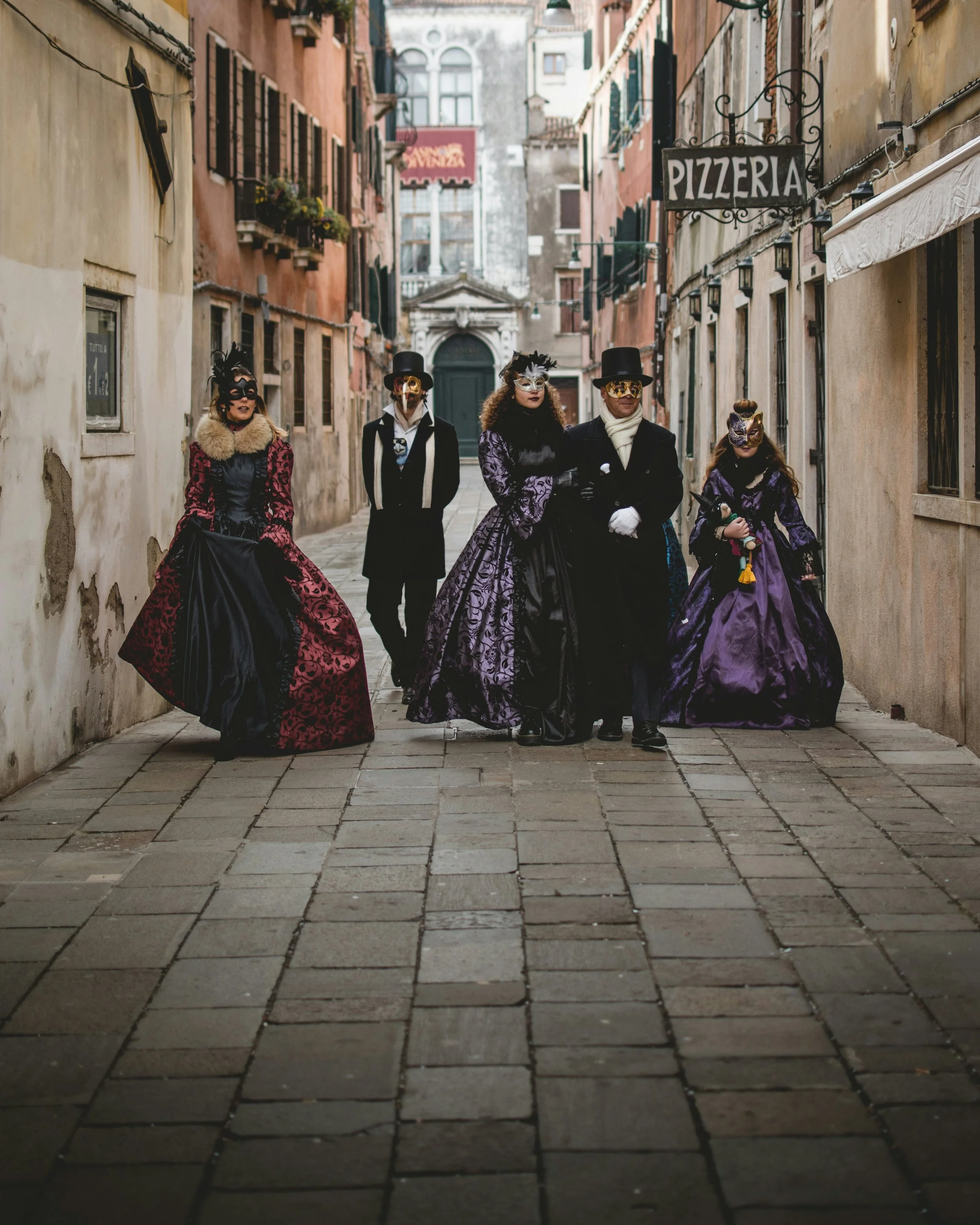
Free-stock Photo courtesy of Daiji Umemoto on Unsplash

Far Villages Poetry-Craft Anthology--April Sale! 🥳

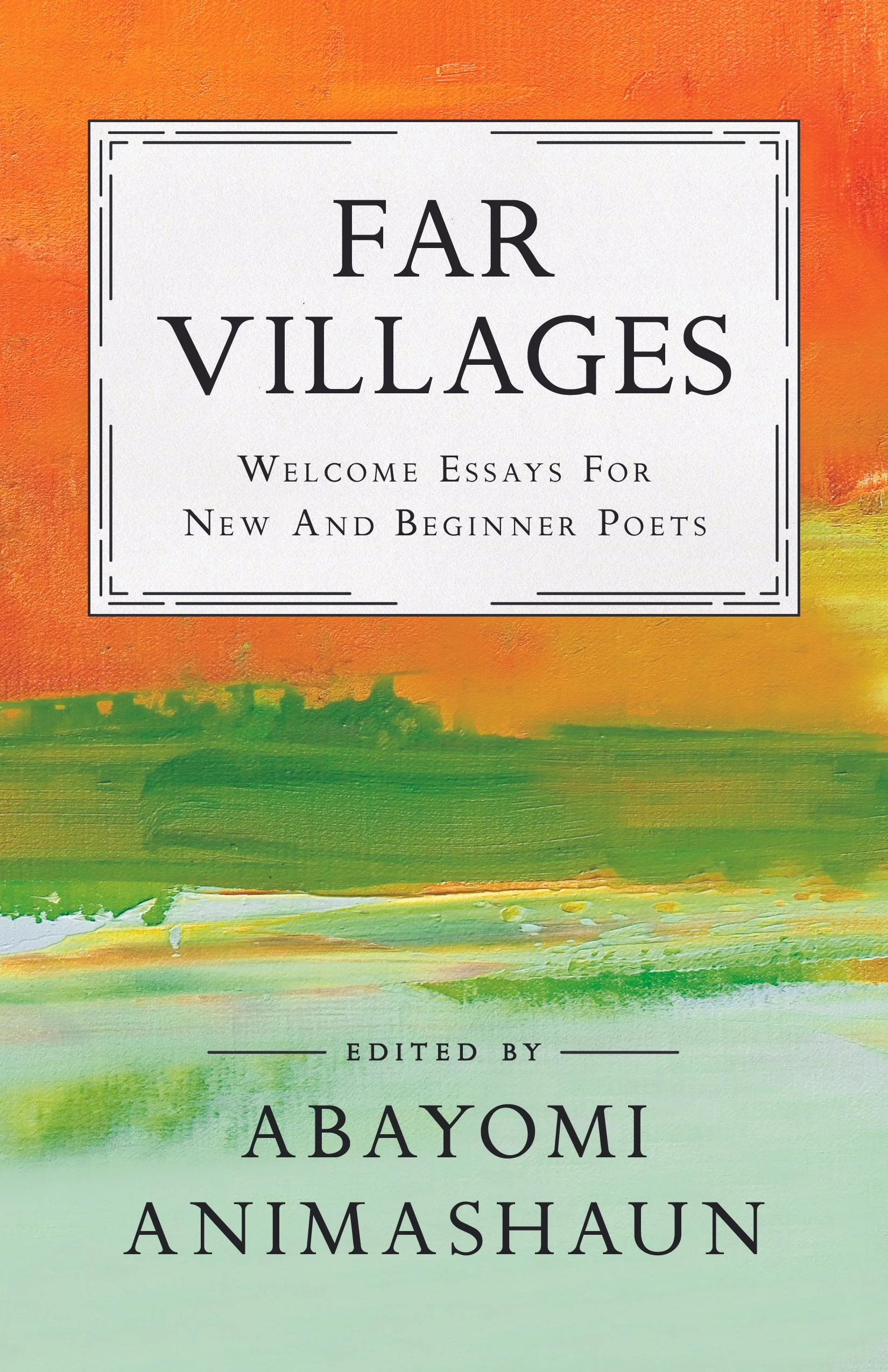
A few years ago, I had the great pleasure of being included in a wonderful poetry craft-essay volume, called Far Villages: Welcome Essays for New & Beginner Poets. The volume was edited by talented Abayomi Animashaun through the marvelous Black Lawrence Press.

If you’re a poet, an educator, an interested reader who wants to learn more about the poetic craft, and/or are looking for a gift that’s sure to bring much inspiration to the poets in your life, I highly recommend this anthology. It’s the kind of book you’ll want to keep on a close shelf to page through for motivation and ideas.

Get your copy now—it’s on sale through this month while supplies last. Clickety-click! Write on!

Great April News: Publication of "It's the Kind of Thing" 🎊

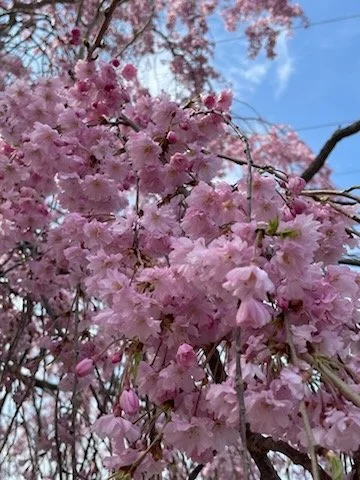
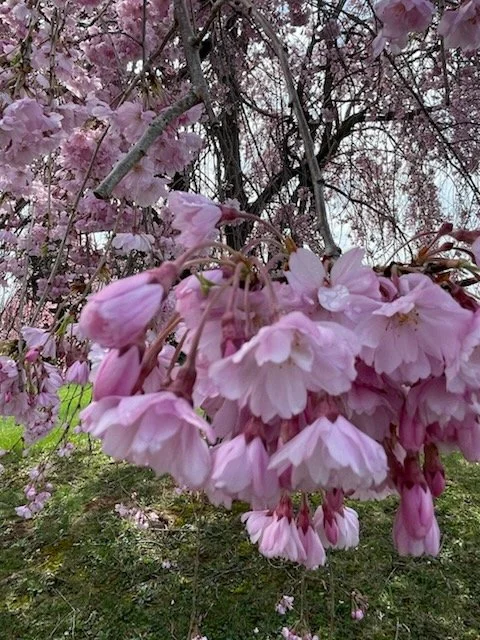
Cotton-candy-colored blossoms and publication: sweet treats of April

So pleased to share that my nature poem. “It’s the Kind of Thing,” has been published in the current, April issue of The Bluebird Word.

Here are the opening lines, and clickety click to read the rest. Also, check out the work of the marvelous, talented fellow writers in the issue, including dear friend Antonia Albany’s wonderful Spent Water Balloons.

To this continued writing life! ✍️

“It’s the Kind of Thing”

if I wrote it you might
not believe me, but I’ll
write it anyway.

For a second, I mistook
riffs of an electric guitar
on the radio
of a passing car

for a stray cat or kitten
and looked up
from my book
for a tail and a lean cat needing care.

Read the rest and the entire issue at: The Bluebird Word.

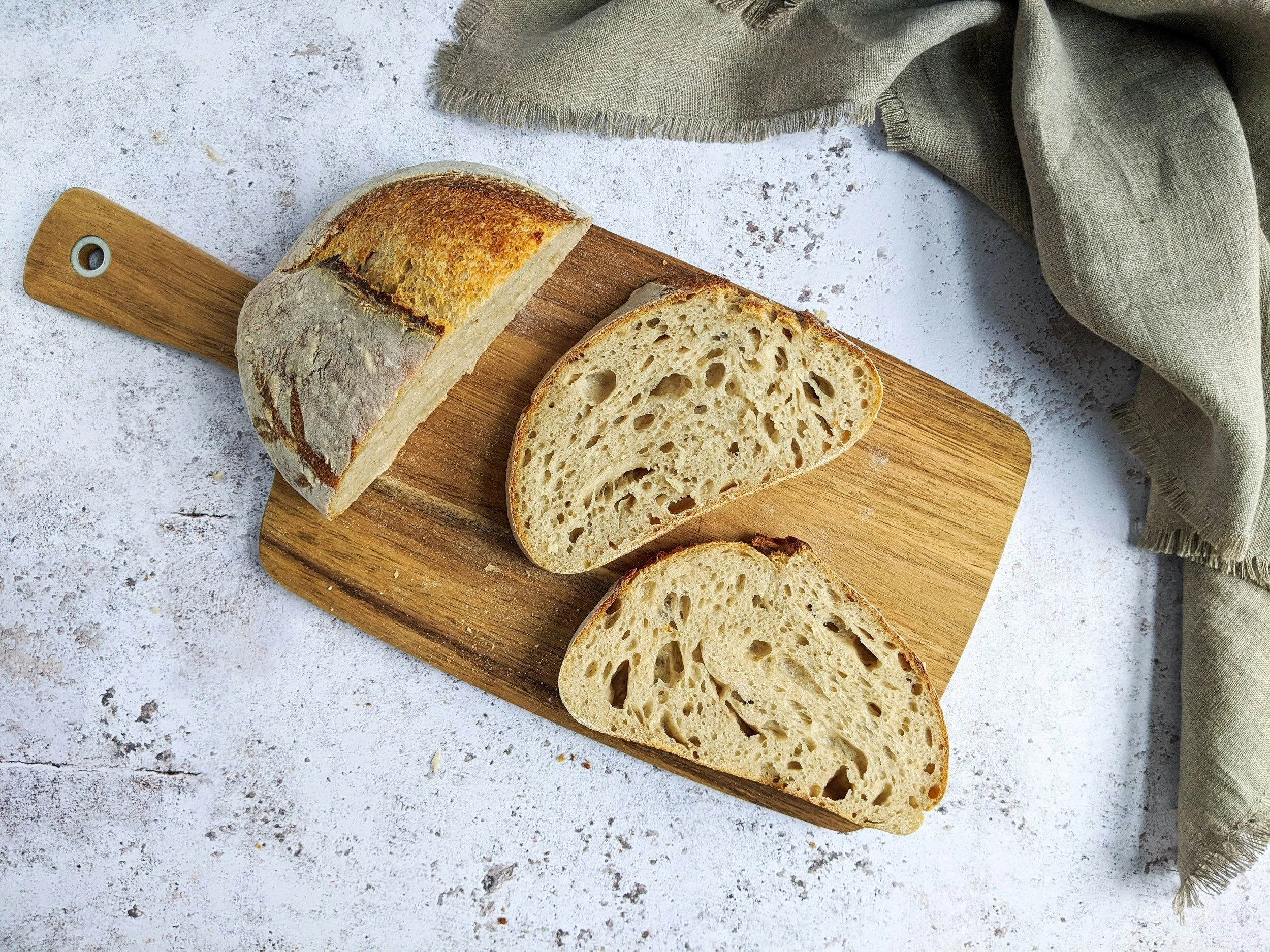
My Food-Themed Article Published Today! 🍓

So happy that my latest article was published at Women on Writing today!

Fabulous Food Lingo and 5 Sumptuous, Savory Prompts to Try 

By Melanie Faith

Most writers are word lovers. We delight in the fun of stringing each little consonant cluster together. 

What might writers adore just as much as the flair of finding just the right synonym or antonym to tell our tales? What pairs well with an appetizer of theme and a garnish of motif and a heaping helping of diction choices with a fresh ooey-gooey slice of second-draft pie? 

Why, food, of course!

Food combines a topic that is both highly relatable and rigorously individualistic. Food writing promises: Sure, we’ve all had salad, but we’ve not all described this heavenly pasta salad from Café Romano on Spruce Street or that delectable BBQ Uncle Ross used to bring to every family function with a tangy sauce so top-secret aunts, uncles, and several second cousins are still trying to figure out and reproduce it (almost successfully) for each year’s reunion. 

Food is inextricably connected to memory, place, and time. Food is both growing up and growing into our better selves. 

Food is also undeniably literary. From Proust’s super famous madeleine to the descriptions of bread, cookies, and cakes (along with those mouth-watering photos) in your favorite print cookbooks or online recipes, food is tied to expression, especially self-expression in relation to our connections with others. Food is also the guilty pleasure stashed in the top or back shelf of the pantry (Shh…, I won’t tell). 

Yes, just like writing, the foods and meals we make, buy, and/or share (or keep for ourselves) provide endless possibilities for creativity—from the individual ingredients to the finished dish on the platter someone gave to great grandma so long ago no one knows where she acquired it but now this treasure is yours.  

We often speak of food enthusiastically in conversation with family and friends, so why not write about food the same way?

Try a few of these ideas the next time you’re searching for something to write and want to get words flowing in yummy formation:

Food-jar fiesta: Get a glass jar (recycled or new) and fill it with scraps of food phrases, one on each small piece of paper. Or page through a print cookbook for topic ideas. Love surprises? Get a friend, partner, child, or fellow writer to contribute ideas to the jar for you. Draw one scrap a week for a free-write. If you really enjoy choosing from the jar (like the best sweets, it can get kind of addictive), feel free to dip into it a few times a week. Once you’ve worked your way through the jar, reload it and write on!  

Make a food-word alphabet: Write A-Z down the left-hand side of a piece of paper. Quickly jot down any food-related word you can think for each letter. Feel free to do a second draft of this list where you use a search engine to add additional words to the list from recipes, cookbooks, or watching cooking shows. Keep this list handy at your desk for future free-writes.

The recipe nobody wants: Write down four or five places where people meet. Then, pick one as your setting. Write for fifteen minutes about a recipe that your character doesn’t want and that others don’t want to eat, and yet…circumstances or traditions dictate they must make and eat this dish. Include body language and some dialogue in a second draft. This prompt is great for exploring tone—from humor to dread—and an excellent way to practice describing various textures of foods we don’t enjoy. 

The nose knows: Write for 15 minutes about a food you would recognize anywhere, from smell alone. This is a great way to practice descriptive writing and making your readers hungry! 

Ask, and it’s yours: Write down a few food-related questions to ask someone in your family or friend circle. Conduct an informal interview where you supply the treats (or a favorite meeting-place does) and you take notes on your friend’s (and your own!) answers one afternoon. You can also do this exercise as a free-write and then swap each other’s answers to read aloud after writing. Some fun options may include: asking if they recall a favorite food or recipe from growing-up years and its origin; asking how, when, or where they learned to cook; asking them to describe a recipe they made that went wrong and what happened (be ready to laugh). This exercise can also be repeated at various times of year, with both longtime friends and new.

Also, check out my latest online writing class (beginning Friday, Oct. 10th): clickety-click.

Courtesy of Women on Writing.

My Article, "4 Epic Takeaways from Myths, Fairytales, and Folktales to Apply to Your Writing," Published Today! 🎉

Splendid news: I’ve had a craft article published today at Women on Writing. The topic is a very fanciful and fun one: “4 Epic Takeaways from Myths, Fairytales, and Folktales to Apply to Your Writing.”

Ta-da!

“4 Epic Takeaways from Myths, Fairytales, and Folktales to Apply to Your Writing”

by Melanie Faith

Stories based on myths, fairytales, and folktales have interested readers and have seen a remarkable resurgence in popular fiction and bestselling novels in recent years.  Authors like Sarah J. Maas of A Court of Thorns and Roses series fame and Madeline Miller’s Circe are household names.

First, let’s explore some exciting reasons why writers and readers alike find these stories compelling and inspiring.

·         They reignite our childhood imaginations. Most writers and readers fondly remember their favorite mythic characters. We grew up on their adventures, and it felt like we grew up with them, too.  Whether it was Cinderella, Little Red Riding Hood, The Frog Prince, or other Brothers Grimm fairy-tale protagonists or Hans Christian Andersen’s Thumbelina, The Little Match Girl, The Emperor’s New Clothes, The Ugly Duckling, The Wild Swans, or The Snow Queen, these stories populated library shelves and bookshelves in our rooms that take us back to our earliest days of being read to and reading on our own.

·         They connect us with timeless stories of human emotion. All of those bedtime stories influenced us as creative thinkers and helped us to learn empathy. I remember a Little Golden Book copy of Hansel and Gretel my dad used to read to us for bedtime stories that I begged to hear over and over, even though it also completely freaked me out with its tender, lost brother-and-sister duo, the gingerbread-house-residing scary witch, and that terrifying oven. I also remember well the beautiful, far-less-frightening treasury of children’s folktales with Rapunzel’s long, long tresses descending and dangling from a fortress tower.

·         They represent our heritages. Myths, fairytales, and folktales are popular throughout the world and in every culture. They feel embedded in our DNA almost. They transmit the values and customs appreciated within a culture. Whether these stories are translated into many languages or remain in their language of origin, they often share commonalities in theme, tone, and plot. Human nature explored with drama and humor and warnings and hope against all odds. These stories can sometimes offer well-paced and satisfying closure we seldom get in everyday life.  

·         They give us other worlds to retreat to and to savor in the midst of turbulence and turmoil. They are epic recreations of stress and struggle with protagonists with whom we can identify. They also give us deeper insight into our own times and our place within them. These are some of the many reasons why stories based on Greek and Roman myths as well as entirely new world-building settings continue to flourish.


What can we take from fairytales to apply to our own writing? Try these four tips:

·         Every protagonist needs a sufficiently powerful antagonist to contend with. If the antagonist doesn’t unleash enough consequences and trouble, the protagonist won’t need to rise to the occasion to protest and triumph. Make sure your antagonists cause enough conflict in your narrative. This is one of the most common reasons for ho-hum fiction that gets rejected. What is your protagonist’s worst fear? That should inform your antagonist’s next moves.

·         When the chips are down, they are never completely defeated. Make sure the larger implications of the conflict are explored in vivid detail so that your readers can imagine the anxious situation and feel it as they read. Embed a small foreshadowed detail to maintain the hope that eventually will prevail.  

·         Setting is significant. Nothing should happen in a vacuum. Where and when a story takes place are vital elements to good storytelling. Add visual images, references to music and art and books and important popular culture of the time, and landscape or architectural details to flesh out scenes, especially near the beginning of a longer work to create vibrant context. Research settings and eras with an eye towards intriguing tidbits to share in your tale. Readers really want to feel like they, too, are stepping into and roaming around the protagonist’s authentic world.   

·         Protagonists don’t need to say a lot at once to have a big impact. Actions and reactions are just as important, if not more so, than dialogue. Definitely write conversations into your tale, but keep dialogue as direct, pertinent, quickly paced, and resonant as possible. Protagonists don’t have time for long-paragraph speeches and explanations before springing into action. The clock is tick-tick-ticking! Show their determination and concern with their actions, rather than their pronouncements.  


The next time you open your draft-in-progress, consider applying these tips to create more vital, vibrant prose. Also, join us for my new upcoming course with further tips about crafting your own riveting protagonists and worlds that will keep readers returning again and again.

Want to learn more? Writing the Mythic: Penning Prose Exploring Myths, Fairytales, and/or Folktales starts on Friday, April 18th. I’d love to have you join us. 😊

Beautiful illustrations courtesy of Women on Writing.

My Dramatic Monologue Published! 🎉

Excellent news! A poem of mine with a new character in a historical poetry series I’ve been working on was just published today at Songs of Eretz!

Check out the poem, and then head over to the issue to read my complete notes about the poem, to see a historical photograph of an iron lung, and to read the work of the talented fellow poets in the issue, which is dedicated to dramatic monologues. 🎉

Flora in the Iron Lung and the Mirror

Melanie Faith


I don’t want to be a complainer. It’s good,

it’s exceedingly good that you’re here. You

came all this way. You look well. You look

so handsome, but then, you always did. I wish

I could reach out of this machine and touch you

after all this time. I wish… well,


let me dwell on something

easier. Let me tell you something nice

Sister Mary Joseph, the afternoon nurse, did.

She’s the young one who wrote to you. Yes,

her penmanship is impeccable. Well,

she sat reading to me. One day,

out of nowhere, she stopped

mid-sentence, and she looked over


and something like sunlight broke over

her face: You know, I see no reason why

we couldn’t jimmy-rig a mirror

right up here. She put the book

upside-down on her seat. That’s how

my machine grew this mirror. She left the room,

came right back.


Sister Mary Joseph’s the tall one—

you haven’t met her—

it didn’t take much for her to reach up and

add it to my machine. You could call it

a fancy modification for my entertainment,

my instant twin and constant company.

I make faces at myself now

into the long hours when there’s nobody

and nothing else.


You’d be surprised on

an endless stretch of days, how many faces

you can pull—butterfly-pinned as I am

inside this darned machine—with just a nose,

two lips, a tongue, and two eyes that

never stop seeing.


Poet’s Notes: This poem is a part of a recent collection I’m working on writing about (among other things): an iron lung, a librarian, and a love triangle. This poem explores polio patient Flora, whose childhood flame, Harry, visits her sickbed. This visit sets off the conflict between Harry and his current love, Helen (the protagonist librarian).   

Read the rest at Songs of Eretz, Winter issue.

My Article Published: "Finding Your Fiction Draft’s Best Beginning" 🎊

Thrilled that my article, “Finding Your Fiction Draft’s Best Beginning,” was published today at Women on Writing. Read the article below, and take the exercise for a spin.

Also check out this link to my new online class, FROM BETTER TO BEST: Writing Fictional Beginnings that Hook Readers, that begins Friday, January 24th. 😊

Without further ado: ta-da! 🎊

“Finding Your Fiction Draft’s Best Beginning”

By: Melanie Faith

 Here are three things that share a commonality: home renovation, finding a supportive life or business partner, earning a degree. What’s their similarity? 

While you think about it, let’s ponder our attention spans, which have grown quite a bit shorter in recent years. Think about how quickly we move onto the next book, song on streaming, or post on social media if it doesn’t grab our attention and hold it. Add to that the fact that publishers receive thousands of manuscripts a year, all vying for attention, and it’s pretty staggering.  

So, what do our initial three examples have in common? They all require a big time investment (often much longer than anticipated) and tend to test our patience at various steps until we reach our goal. If there are consistent through lines in life, it is that most of our efforts require regrouping, refining, and numerous revisions.

With so much streaming content and instant entertainment available and so few minutes of free time each day, it’s even more important than ever that we writers intrigue our readers from the start or else there’s a world of other options they’ll choose from. Gone are the days of the slow-burn build-up of a few pages. While it takes more time and effort to rewrite opening pages, it’s well worth it to hook our readers.

What should we do to ensure that our beginnings make a positive, have-to-keep-reading-this impact?


·         Bring in the Buddies: Have you looked so often at your draft that your brain is tired? Or are you moderately sure your opening is fine, but then again… An external reader can be invaluable, either way. Props if they are another author, but they don’t have to be. Give your first pages/chapter to willing friends or colleagues and ask what one passage they liked best; this is the element that should front-end your next draft.  Feel free to get the opinion of another reader or two, but don’t ask so many readers that you get numerous conflicting opinions, which can be confusing. In my own experience, asking between one and three readers is a sweet spot to get the perfect amount of feedback on whether my current opening works well. If your readers are also writers, make sure to return the favor for them sometime. Another option: send just the first page and have them note what they think is the most interesting or important line. This really zeroes in on whether the current opening lines flop or fly.   


·         Heed the Hunch: You know that line that made you smile when you wrote it? That line that sort of shimmered from the page or made you stop and feel surprised?  That little jolt of wow or that little tickle of hmmm is your inner writer letting you know that something impactful has just landed on the page. If that passage is already on your first page, great! Leave it there. But if it’s not, what if you moved it forward? I’ve often moved favorite lines forward and then either cut out the original opening and written transitions to the latter parts of the chapter or merged the original opening into other parts of the manuscript. Either method can work well, depending on the story’s needs and your own preferred editing methods.


·         Skip Ahead: Newsflash: your first chapter doesn’t have to be your first chapter. Let me rephrase that: the chapter that’s currently first may actually not be the best final-draft opener. Instead, a second, third, or even later chapter might hold a more compelling way to open your narrative. Feel free to move a scene or a whole chapter forward.


Try this exercise! Reread your draft’s current opening page or two and answer these questions (or ask a friend) to see if you might have a better opening that’s currently much later in your draft:

·         Is there action in the opening scene?  

·         Is there immediate conflict for the protagonist to struggles against?

·         Is it clear from the first page or two who is telling this story?

·         Is the protagonist compelling in this first chapter?

If the answer to any of these questions is “not really” or “not as much as there could be,” then it’s likely you have a faster-paced, more absorbing opening scene that you could move forward. Remember that editors, agents, and readers need your opening hook to grab their attention on page one or else they could stop reading. Sharpen the imagery, characterization, dialogue, or setting that will keep those pages turning.


Photo courtesy of Eilis Garvey and Unsplash.com.