My Return to Journaling & A Super Journaling Resource ✍️

Recently, I found a journal I kept in 2017. It’s a small hand-held journal, a little longer than a wallet, with a gold-leaf cover. While the cover is flaking a bit from wear, the insights inside the journal are vibrant and never fail to bring a smile to my face. The year 2017 is on the center of the front cover in a space-agey font.


Each day, in blocks about a third of each page and five or six lines each, I’d noted events I had long forgotten and, but for the journal, would never have remembered—from little things my nieces said as very small children to favorite quotes that boosted my day to classes I taught, friends’ milestones, and more.


For many years after 2017, I didn’t journal regularly, save for 2024, where I kept a drawing/doodling journal every day that helped me flex and grow my sketching muscles. I missed reflecting in a few words to a paragraph each day, and I wanted to get that feeling again of writing down for savoring later—whether that’s six weeks, six months, or sixteen years from now.

So, in May, I purchased a 3-year journal with spots to write each day. You’d think I would have dived in upon getting the robin’s egg blue, inviting new journal, but… nope. In the midst of preparing my latest fun book for publication and marketing, life got lifey and my new journal, alas, sat on a TBR pile until mid-August, when I cracked the spine and got started at last.


All’s well that ends well: it’s been a little over two months now, and I’m starting to notice a delightful thing happening that I’d forgotten from my 2017 daily writing: earlier and earlier in the day I notice little things I want to write for each day. Sometimes it’s an observation; today it was a quote and a description of what I doodled this afternoon. I’m actively and rather easily finding so many great options for tiny morsels to uplift and entertain me in the near future. One of my favorite parts of writing a journal is that it trains the mind, eyes, and heart to notice more openly. It also helps me to live more in the moment in the midst of often-rushed days.


Journaling is a slowing and an appreciating way of being. It’s also fun and individualistic. It can be personal or shared with others. You can make the entries as short or long as you’d like. You can say as much or as little as you feel comfortable sharing. You can use all words, doodles and words/captions, a mixture of both, or even collage.


The sky’s the limit. What matters is setting aside a little time, a little calm and focus, and an

optimism that each day carries something well worth sharing with yourself—both now and in the future.
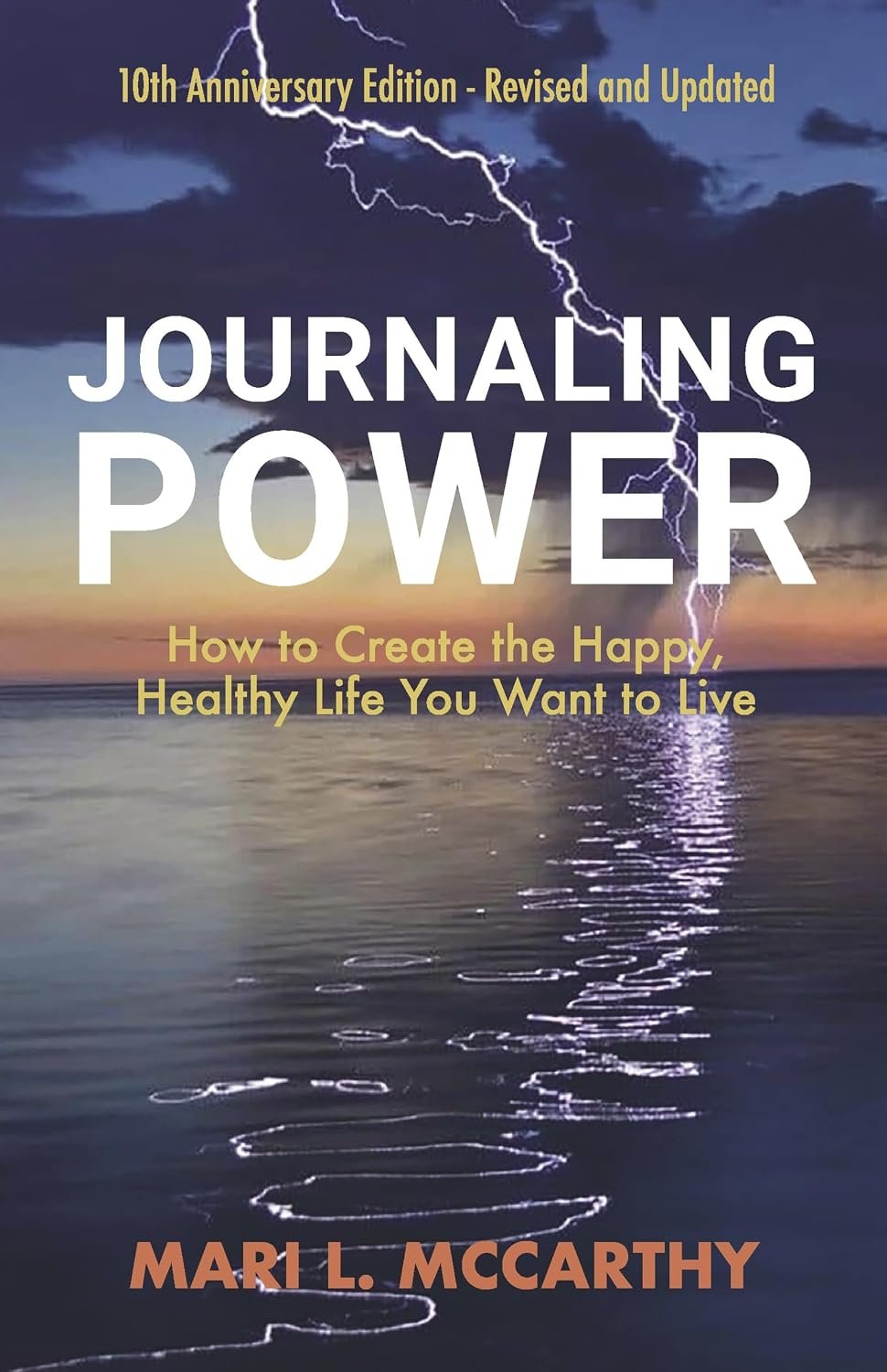

To find even more encouragement and joy in the journaling process, I heartily recommend Mari

McCarthy’s Journaling Power: How to Create the Happy, Healthy Life YOU Want to Live. It’s currently celebrating its 10-year publication anniversary and is packed with advice, tips, and wisdom to make your journaling journey an enriching and meaningful process for many years to come.


Learn more about Mari and her wonderful books at: clickety-click.


Happy Holidays & a Year of Daily Doodles 🎉

Happy Holidays! I hope this season finds you all inspired, resting, and excited for 2025 ahead in less than a week.

I’ve worked on a doodle project for the past year that I’m set to complete on Tuesday. I’d love to share about it now, with some coordinating drawings. Without further ado:


“13 Things I Learned from [Almost] a Year of Daily Doodling”

It just feels good to draw. Period.  I knew this intrinsically as a child, and I got to relearn it this year.

The less pristine, the better, the more confidence. During January to around March, I frequently made a soft under drawing in pencil, which I would then trace with a pen or marker before erasing my guiding lines. By around April, my confidence had grown so that I rarely grabbed a pencil first. From July onward, I can’t remember grabbing a pencil to start at all. 


Ink-feel is a thing. Some days, I wanted slippery, twirly gel ink or a smooth ballpoint or the gentle flutter of wooden colored pencils while other days I liked either the blunt ooze of a thick marker or highlighter or the waxy appeal of crayons that slowed me down. Just like picking hues to use, my mood could dictate the material I grabbed. Once or twice, I bought new markers or pens to play with. There’s something very affirming and soothing to the nervous system about making marks on paper, even if the drawing doesn’t turn out. Okay, especially when the drawing doesn’t turn out.


Limits open you up. The most time I spent on a drawing was 20 minutes, but that was mostly in January-February. After that, my daily doodle journaling tended to be less than 10 minutes, including any coloring with colored pencils/markers/coupy pencils/crayons. The more I intuitively trusted that I could make good marks, the easier it got to increase my speed.

Phones are great for reference photos:  Sometimes I could draw using my mind’s eye, but for other days, a quick image search on my phone yielded many options for reference photos that really helped as I considered various angles and shapes and details to pick and choose from for my own doodle. I reminded myself that professional artists have long used references to research, prepare, and/or draw. No shame in the game.


Yeah, this is drawing, but feel free to combine with captions whenever you want to: Sometimes, I drew little captions or a sentence or two of explication or just arrows and words to label my drawing. I’ve read a few artists’ (published) notebooks and drawing how-to craft books since 2020 that show other artists who integrate small bursts of prose as well, which gave me the idea (and the permission) to mix and match.

Prompts are magical: I have two or three sketchbooks I’ve made intermittent doodles in over the past two or three years, but having a daily page with a specific prompt on it took the what-should-I-try-to-make decision away and opened me up to whatever the prompt asked for each day. After drawing, I made it a ritual to mark the next day’s prompt with a page marker, but I didn’t read the prompt until it was time to draw each day.

Ditch or amend prompts whenever you want to: Now and again, I didn’t know how to make what the prompt asked or didn’t feel like following the prompt, so I didn’t.  Like the day I decided to draw a bunch of stars. I just made something else up on the spot. Also liberating.


Some drawings can’t be improved with more focus or more effort—that’s fine, let it go, and you’ll draw more tomorrow and the next day.

 Some drawings can bloom with more effort or focus. You’ll know the difference. One day, I skipped a space and labeled the new drawing as “take 2.” If you want to keep trying, then keep going.


Watching the pages accumulate, even if most of the drawings are still not braggable or even what you’d hoped, is one of the best feelings ever. Before starting the daily doodling, I had more of a when-the-mood-struck drawing practice. Not exactly the best way to grow one’s art.  Becoming stronger at an art requires more than just dabbling when the mood strikes. I knew this from my writing, and I had the chance to relearn this with my drawing.


Imperfect? Who cares? The journey was for the fun and for the growth in it, both of which have paid back handsomely. 


Drawing every day makes me want to draw more. Once I finish the year this week, I know that I’ll want to continue to draw regularly. Paging through my daily doodles from January 1st to late December, I can see how my drawings have gotten more secure, more space-taking, and also more okay with the mistakes in perspective. Here’s to more doodles ahead!


Mindset Medicine 📔📝

Mindset Medicine: A Must-Read for Motivation

Remember that feeling of opening the decorative cover of a new journal to the first crisp, fresh page, awaiting all of your musings, pens in myriad colors at the ready? That anticipation! That knowing that you’re not entirely sure where your written journey will take you but that it will surely take you on a good, introspective journey by book’s end.  

That’s the feeling, too, while reading award-winning author Mari McCarthy’s Mindset Medicine: A Journaling Power Self-Love Book.

Packed with authentic examples and can-do tips, Mindset Medicine explores a wide variety of life-applicable topics, from gratitude and respect from others to transforming your life through asking the right questions and establishing solid boundaries.

This book meets readers where they are in life and offers practical and positive next steps for setting goals step-by-step, elevating moods, and letting go of damaging thought-loops that keep a creator mired or stuck.

It’s like having your best friend who happens to be a life coach sitting with you and supporting your hopes and goals as you translate them into action steps.

Get your journals ready; you’ll surely fill them as you read (and, if you’re like me, reread—so many of these chapters invite a second and third visit) and explore an updated mindset that brings refreshment, renewed focus on your dreams, and a lot of self-knowledge along the way.  

Want to read more? Great news! This book, as well as books 1 and 2 in her Journaling Power Revolution Series) and other inspiring resources, such as workbooks, are available and ready for your perusal at: Amazon and createwritenow .

 Check out the other stops on Mari L.McCarthy’s Book Tour this month and next: