Check out More at The Porch Swing!🍂

Happy weekend, everyone!

Two quick updates: one, I’m delighted that more of my very fun conversation with talented poet and artist @gilliancourtneypoetry about my poetry and writing experiences was featured this week at @theporchswingpoetry on Instagram. Stop by to peruse and like the posts.

Subscribe to read more amazing content by talented authors (and some fresh poems from yours truly) in the near future! 🍂

**

Check out my latest poetry book, Does It Look Like Her? Available now at Amazon or for signed copies, check out my Write Path Productions Etsy page.

I also wrote an amazing craft book called Poetry Power with tons of exercises and inspiration to keep your poetry pens moving; available through my awesome publisher, Vine Leaves Press.

#writeeveryday #ThePorchSwing #WomenPoets #PoetryCommunity #WomensVoices #CreativeExpression #SupportWomenWriters #PoetryJournal #Inspiration #WomenInArt #PoetryLove #WriteHer #FemaleVoices #CateAlicePoetry #IndiePoetry #poetryislife #poetryislove❤️❤️❤️ #poetryislove

"3 Significant Ways to Explore Theme in Poetry" 🍂

Super excited that my article about exploring theme in poetry was published today at Women on Writing. Check it out! I’m also taking sign-ups for my fun class that begins on Friday, October 18th—more details below about that and my latest poetry book as well. Read on! 😊

3 Significant Ways to Explore Theme in Poetry

By Melanie Faith

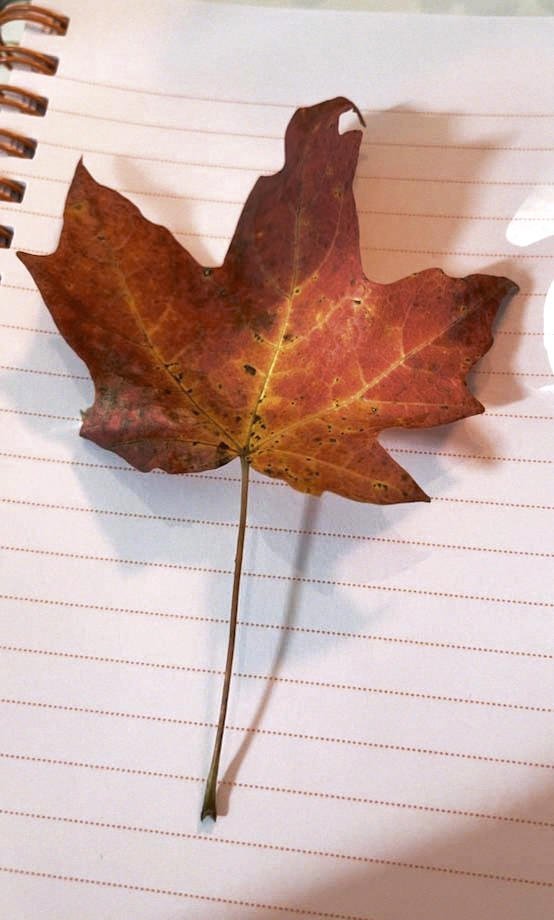
First whirly-twirly leaf of the season. Photographed by yours truly. 😁💗

Poetry is an evocative, word-rich art. It’s compressed language that so often tells a much, much wider, deeper, bigger story about the human journey. Read on for three tips that will make discovering and deepening themes within this art form a motivating voyage for you as a writer and a meaningful experience for your readers as well.  

Write a poem where an object expresses so much more than the sum of its parts. Think for a moment of the top two or three objects that have made a difference in your life. Maybe you still own them, or maybe you’ve lost them in a move or sold them years ago, like a first car. Maybe it’s a Christmas or birthday gift you still have that someone you love gave to you, or maybe it’s something you bought with your first or last paycheck from a job, Or perhaps it’s a commonplace item, like a pencil or pen, that has nonetheless figured prominently in your life in recent years. Describe the particulars of this object.

Poetry thrives on attention to imagery, with attention to detail. Our lives are terribly rushed, even on the “slow” days, and poetry encourages us both to slow down and to notice our world. Poetry also makes us feel gratitude for what we have and where we are in our lives at this very moment. Describing objects can be as short as a three-line haiku or a five-line tanka or as long as a sonnet or even an epic poem of many pages. Word count or style of poem is not nearly as important as being as vivid, visceral, and specific about the object and its meaning to you as possible. Write about the object as if either someone who has seen this fill-in-the-blank commonplace object a million times and even owns one can appreciate it at a whole new level, or as if someone who has never seen your unique object can intuit its worth and see it in their mind’s eye clearly. The object you choose—whether a pair of roller skates, say, or a key to your first car—will remind readers of their own experiences with roller skates or their first car. That magic connection between poet and reader shines through in object poems. 

Write a persona poem. Just like fiction, poetry can be a container for speaking in another character’s voice. Just because a poem is written in first-person POV doesn’t mean it has to be from the lens of your own life experience. Wonderful poems have been written in first-person from the point of view of fictional characters, historical leaders, artists real or imagined, you name it. You can also write a persona poem from the perspective of a non-famous, everyday person. They can be set in ancient history, modern history, present-day, or even a future we’ve not reached yet. Science-fiction or fantasy poetry? Why not?! Persona poems allow the writer to explore character creation, historical or present or future time periods, the timeless struggles and joys of being human, setting, and so much more within a compact poem. 

Many of the poems in my current collection, Does It Look Like Her? are persona poems from the POV of a painter and her young son; I’m neither a painter nor do I have a son. I found, though, while exploring my protagonist’s and her son’s lives, that through these characters I could say resonant things about being an artist, caregiver, and member of a family than I likely would have explored if writing from my own limited timeline. It’s often easier to tap into universal human experience through a character than relying solely on my own lens and experiences. Readers, too, often connect quite deeply with characters—it’s ingrained in us to put ourselves into the place of characters from the first reading we experience as small children who are being read to until we can read on our own.

Write a poem to celebrate a special occasion or to commemorate a milestone, whether yours or someone else’s. Great poems have been written to honor work anniversaries, engagements, marriage anniversaries, wedding receptions, births, retirement, graduations from kindergarten, high school, college and university, grad school, and first and last days of work. The poem can be in honor of a national holiday, an international event, a religious celebration, a place-centered poem such as celebrating the opening or anniversary of the founding of a school or organization or charity. You name it. Options abound! Any person, place, group, or stage of life is well worth exploring poetically, whether you write it for your own satisfaction, share it with a friend or partner, share at an in-person or online venue, or publish with a literary journal with thousands of readers. 

Enjoy the exercise below, and please join me for my October poetry-writing course where we’ll explore even more themes within this thought-provoking genre.

Try this exercise: Start with choosing the type of thematic poem from the three above that most interests you. Make a quick list of three or four topic ideas. Have a friend give you an idea or two as well, to lengthen your list of options. Then pick one of your ideas and write a poem draft in fifteen minutes. I recommend setting a timer—there’s something about writing a first draft with a time limit that tends to get words flowing. You can always set the timer for fifteen more minutes to expand the time for drafting if you want. Use this list to write more poems on other days. Go! 

🍁

Threading the Needle—Writing Thematic Poetry

Instructor: Melanie Faith

Start Date: Friday, October 18, 2024

Duration: 4 Weeks

Class Type: Asynchronous; it can be studied from anywhere in the world, in different time zones.

Location: Private Facebook group and email student provides when registering for the class.

Feedback: Weekly instructor feedback of exercises.


Description: Themes are important in vivid writing. Strong poetry often explores specific themes, from poems to celebrate special occasions and the natural world to poems that celebrate art and other beloved objects. In this class, students will read about 9 forms of poetry in our class texts (one craft book, How to Write Poetry: A Guided Journal of Prompts, and poetry books: Owls and Other Fantasies, The Optimist Shelters in Place, and Does It Look Like Her?, and one optional book: Letters to Joan), and then pick from the weekly themes to pen a poem for personalized instructor feedback on what is working well in their poem and what they might revisit/revise.

Weekly topics include: Nature Poetry, Occasional Poetry, Ekphrastic [Arts] Poetry, Found Poetry, Persona Poems, Narrative Poems, and more! There will also be an optional private class group for classmates to share shop talk and the instructor will provide posts of poetry-writing and literary links to inspire the writing process. Join us for this inspiring poetry course!

View the full listing for the curriculum and testimonials.

🍁

Check out my latest poetry book, Does It Look Like Her? Available now at Amazon or for signed copies, check out my Write Path Productions Etsy page.

I also wrote an amazing craft book called Poetry Power with tons of exercises and inspiration to keep your poetry pens moving; available through my awesome publisher, Vine Leaves Press. Signed copies also available at my Etsy, Write Path Productions.

I'm Featured Poet at The Porch Swing Poetry! 🍁

So pleased to announce that I was recently interviewed by super talented @gilliancourtneypoetry about my poetry and writing experiences and will be featured this week, along with poetry, at @theporchswingpoetry on Instagram!

Check out the first part of our interview today and return later this week for poems by yours truly. 😊

Read more work at this amazing new poetry venue and return often for inspiring poems, interviews, and posts by many talented poets. 🍁

"3 Exciting Ways Creating Art Enhances Writing" Published 🖼️🎨

 Super excited to share my new article that was published today at Women on Writing! Check it out. 🥳

3 Exciting Ways Creating Art Enhances Writing

By Melanie Faith

Have you always wanted to try (or get back to) painting, drawing, making videos or music or fiber arts, dancing, sculpting, photographing, making jewelry, making hybrid work, pottery, or another art form but felt like it was out of your reach, you didn’t have enough time or the right skill level? This article is for you! You have great company. Including me. 


As a creative writing teacher and author, I didn’t consider myself a visual artist and I didn’t allow myself the time until recently to explore, dabble, and create the other things I really wanted to make. 


It took me a lot of years to realize one of the reasons. Art class in sixth grade was required for all students. How I loved noodling around with the supplies and chatting to classmates at our art tables, making jokes and attaching feathers and sticks and other items to our mobile projects, getting charcoal smears on our hands as we tried our hands at drawing of a vase of flowers and then our classmates’ profiles. It was just like elementary-school art, only better, because the lessons were more challenging and covered diverse types of art. Then something unfortunate happened. 


Seventh grade art was an invitation-only club. And I didn’t get an invitation to join. I’m pretty sure that’s the point at which I stopped even trying to just make things for the fun of making them. The exclusion of it settled: art-making is for others


So for years, I carried cameras and photographed all matter of artsy things without calling myself a photographer or trying to get published. I visited museums and student art shows and doodled in margins of journals but never showed anyone. I never talked about it (like I told oodles of people about my writing), and I never took classes. Sometimes, I grabbed scissors and glue and made collages from old magazines that I put on my door to amuse myself, but I never considered just how happy it made me to create these things, just how contented and relaxed I was in the making process, because I didn’t think I was talented at it.


Eventually, I started to take baby steps. I started to share my photography, first with friends and then submitting to magazines. A few years ago I treated myself to a “real” sketchbook where I could stretch out across the page and make bigger marks. I gave myself more space to make, and it enhanced my writing life.


I’d love to encourage you to explore whatever arts appeal to you as well. Don’t wait for permission or until you feel it’s comparable to a famous artist or even to the quality of something you’ve seen a friend do. Begin now. See what you can do. No stakes, no pressure. 


Let’s take a look at how practicing an art—any art—can deepen and inspire your writing process. 


It boosts play and discovery.


I’ve long been a fan of serial cartoons, one-panel comics, and graphic novels. I love the multitude of options for telling a visual story well. As a young kid, I devoured Cathy, Frank and Ernest, Peanuts, Hägar the Horrible, and Garfield in their daily installments in my parents’ newspapers (and made a scrapbook of them one year), and once I started teaching and graphic novels became part of the high-school curriculum, I discovered afresh the amazing story and character possibilities in comics through Persepolis, Maus, and Scott McCloud’s craft book, Understanding Comics: The Invisible Art. I began doodling a little caricature of my face and my waving hand that I enjoyed adding to cards for friends and my nieces. This year, I finally gave myself a fun new challenge—to write a 3-page comic I called “I Could Have Been Veronica.”


I worked for about a month, from conceiving the story to hand drawing the panels, to revising the story and drafting twice before the third, final, draft. And had the best time! Is it professional? Nope! I’ve got some (okay, many) slanting lines, and I redrew more times than I’d like to admit (here’s looking at you, waving hand that looked gnarled and pair of tap shoes that were a terror to draw in scale), but did that ultimately matter? Not one jot. I spent many pleasant afternoon and evening breaks with my colored pencils, pens, and notebook, adding to the three-pager until it was time to share at my blog. 


It halts perfectionism, the inner editor, and the competition-fair mindset.


The important thing was never that the comic should be perfect or professional quality. The goal was to get lost in the joy of seeing how I would create this three-page comic. To evolve and stretch the limits of what I could draw and say within the tiny frames. To relish the moment of creating for prolonged, short bursts. That is, the goal was not to compare it to anything I’ve read and adored in graphic novels, comic strips, and cartoons, but to make my own something. A pure, untainted, joyous flow of creativity. Making art for the sake of making it. Very satisfying.


It facilitates joy. (Who couldn’t use more of that?!)


It matters less and less that I’m not naturally talented in the visual arts I’ve chosen to enjoy (I will pick up what I need to know through making things, exploring, reading about them) or that I wasn’t seen long ago as a good candidate for art club (that was so 7th grade!). I like to make things now, want to make more in the future, and that’s enough. Whatever I make will encourage my perceptions, challenge and inspire me, and engage the side of myself that likes to reflect and dream. Refreshing.  


Join me for my August Art Making for Authors class, which begins August 2nd. You’ll get a chance to break out some supplies and practice the kind of projects you’ve been wanting to make. You can pick any form of art you fancy for each assignment, and we’re not looking for perfection or comparison—we’re looking to savor the making process.  Learn more and sign up at: clickety-click.

⭐ My Narrative Poetry Article Published at Women on Writing's Craft Corner! ⭐

Super excited that my article about narrative poetry was published at Women on Writing today in the Craft Corner. 🪻🥳

I had a blast talking about this meaningful type of poetry as well as my own writing practice, and I packed it with tips for writers exploring this exciting form of verse!

Signed copies of Does It Look Like Her? available at my Etsy store: clickety-click. Also, available (unsigned) through Amazon: clickety-click.

Also, If you, your friends, or your students or writing group are interested in learning more about writing poetry, I have a lot more writing advice and fun prompts for poets in my Vine Leaves Press book, Poetry Power (scroll to the second book on the page for links to Poetry Power ) ! Check it out: Poetry Power: clickety click and at Amazon:clickety-click.

Does It Look Like Her? Book Birthday! 🎂

It’s book-birthday time! 😊So excited to release my little-book-that-could out into the world of readers. It’s available now at Amazon: clickety-click. 🥹📚

Photo: Free Stock at Unsplash.com, courtesy of Laura Adai

For anyone who’d like a signed copy, I have some books en route: I’ll post that link to my Etsy when I have copies in hand, likely later this week or early next, so sayeth the postal estimate. 😉  

If you’re on Goodreads, please consider adding my book as a want-to-read and/or leaving some stars and a short review at Goodreads or Amazon—reviews make a huge difference in championing a book and are much appreciated. 💗

 A poem from the collection to celebrate book-launch day🎊 :

Alix Encourages a Discouraged Student Who Stays After Class at the Art League 


it’s okay

to be tired

of it all and

yet to keep

showing up


in fact, what

they don’t

tell you is

we all do,

it’s how we get

to a breakthrough


Photo: Free Stock at Unsplash.com, courtesy of Ashe Walker

Sneak Peek: "Does It Look Like Her?"

Care for a glimpse at my poetry collection’s plot? Ta-da! 🎊📚

Alix briefly meets an accomplished artist at a coworker’s dinner party and subsequently sits for a painting that becomes well-known. But Alix is neither a one-trick pony nor an ingénue; she’s 47 and embarking on her own painting and teaching journeys while starting her life over with her young son.
 
This collection of narrative poetry spans years and POVs—including Alix; her son, Sam; her ex; and her colleague, Meghan—and explores what it means to pursue artistic passion, the personal meanings we overlay onto art and artists in a society not conducive to art-making, ambition at midlife, the indirect route to so-called overnight success, and more.
 
Includes Questions for Discussion, Reflection, or Journaling as well as Additional Reading Suggestions.

New Project: Does It Look Like Her? Cover Reveal 🎊

Surprise! Time for a cover reveal of my new poetry collection, Does It Look Like Her? Also known as: my first self-published book project and a grand adventure.

Next week, my book will officially have a book birthday and be available for purchase (stay tuned for more details!), but I couldn’t wait any longer to share this first glimpse at my little first-born, self-published book baby.

For a few years now, I’ve loved teaching a university course about submitting work and publishing, getting to share my own knowledge as an indie and small-press-published writer and editor, but the one aspect of publishing I didn’t know a lot about was self-publishing. I previously had no firsthand experience with self-publishing a book through KDP, which was a shame because I’ve long been meaning to learn. #goodintentions  

When I started writing these narrative poems early last year, in the back of my mind, I thought, “Hmm, maybe this is the perfect time to learn a thing or two about self-publishing with one of my own manuscripts, so I can share with my students and friends.”

Fast forward a few months #lifeflies and a rollercoaster learning curve, and I finally nudged myself into gear and am so grateful I did. #stepbystep #perfecttiming   

If there’s anything you’ve been dreaming of doing or thinking about starting for a few years, begin here and now. This is your gentle nudge; you’ve got this first step.

My collection may not be perfection, but I gave it my all, and I can’t wait to share these poems about a painter, her son, and the artistic process!   

My Flash Fiction Published at Bright Flash Literary Review! 🎉

I’m excited to announce that my flash fiction, “It was just supposed to be,” was published this week at Bright Flash Literary Review! 📚

Check out my story below as well as the awesome stories by fellow authors at their current issue. If you write flash, consider submitting, too.

“It was just supposed to be”


a quick zip through aisle seven and back.

Somebody said she’d moved outside Rawston somewhere after, so it never occurred to him that Tuesday before New Year that he’d turn the corner with the laundry detergent in his right hand and there was Maisy.

“Hey,” was all he thought to say.

“My sister needed a few things,” she half-smiled.

Photo courtesy of Eduardo Soares on Unsplash.com, free stock

There was a baby strapped onto her in one of those carrier things he didn’t know the name of. She was someone’s mom now. That was weird, and new. Fifteen years together. They never. He never thought she’d wanted one. He didn’t. Doesn’t.

The baby bopped legs and arms in herky-jerky movements. The baby had Maisy’s curls. 

“Just getting this,” and he held up the neon plastic jug like he was proving something, as if until he’d pointed it out it’d been invisible.

Should he have said something, asked about the baby—Maisy’s baby—a name maybe? An age? He hadn’t seen any teeth when the baby had grinned at Maisy, but how old are kids when they get front teeth? Do back ones come in first?

Maisy had bounced a bit on the balls of her feet near the stacked boxes of soda crackers; the baby laughed in reply. They made a tableau together like he’s seen mothers and kids do on TV.

“Yep, everyone needs clean clothes,” she said.

She looked tired in her eyes, but happier than she ever was their last few years. Calmer somehow.

“Good…good point. Hey, great seeing you,” he said, because he could think of nothing else to say but random inanities. The baby’s hair the exact raven black of Maisy’s the night they’d met as freshmen. He’s got some grays now.

The baby had some other guy’s eyes. Weird. He’d turned away.

“You, too, Darvin,” she said, using her sympathy voice.

The baby kicked into cracker boxes, and the front one wobbled but didn’t fall.

“Look what you’ve done, little cutie. Yes, you, my little cutie,” Maisy cooed and laughed.

He ducked into aisle four; he dropped the detergent onto a random shelf. No longer any energy left for waiting in line, for another possible sighting. He couldn’t. He was outta there.

He lightninged through electronic double doors, out of breath but not running.

He’ll grab another detergent at the QuickShop after work tomorrow and stew about Maisy tonight.  He leans back in the tan recliner; they’d picked it for their first apartment after college. He’d liked the red one, but Maisy said tan would go with more things. She’d been right about that. About more than that, he guessed. 

He should take his mother up on her offer to reupholster it.

“Give it a new look,” Mom had said. “Or else donate it to charity, get something new.”

Yeah, but the chair’s the last thing left from their years together.

He keeps the living room lights off tonight; his laptop casts a pale green light that wobbles against the opposite white wall, the same color it was when he moved in.

Is Maisy still at her sister’s on Root Lane? Seven miles is nothing; how easily he could jump in his truck, drive out that way. Just to see.

He presses back into the tan upholstery, but there’s nowhere further to go. It was far easier when he could think of Maisy as alone, like him, near Rawston at night.

He feels it in his gut: Maisy’s gone home to the man whose eyes the baby shares. Their baby.


Biography:  Melanie Faith is a night-owl writer and editor who likes to wear many hats, including as a poet, photographer, professor, and tutor. Three of her craft books about writing were published by Vine Leaves Press in 2022, including her latest, From Promising to Published. She enjoys ASMR videos, reading, teaching online writing classes, and tiny houses. Learn more at https://melaniedfaith.com/ .